
George Lucas Says Hollywood Can’t Stop AI. He Doesn’t Think It Should.
The Star Wars creator says artificial intelligence will make movies easier to produce and compares the current anxiety to earlier technological shifts, putting one of Hollywood’s great technical innovators firmly on the pro-AI side.
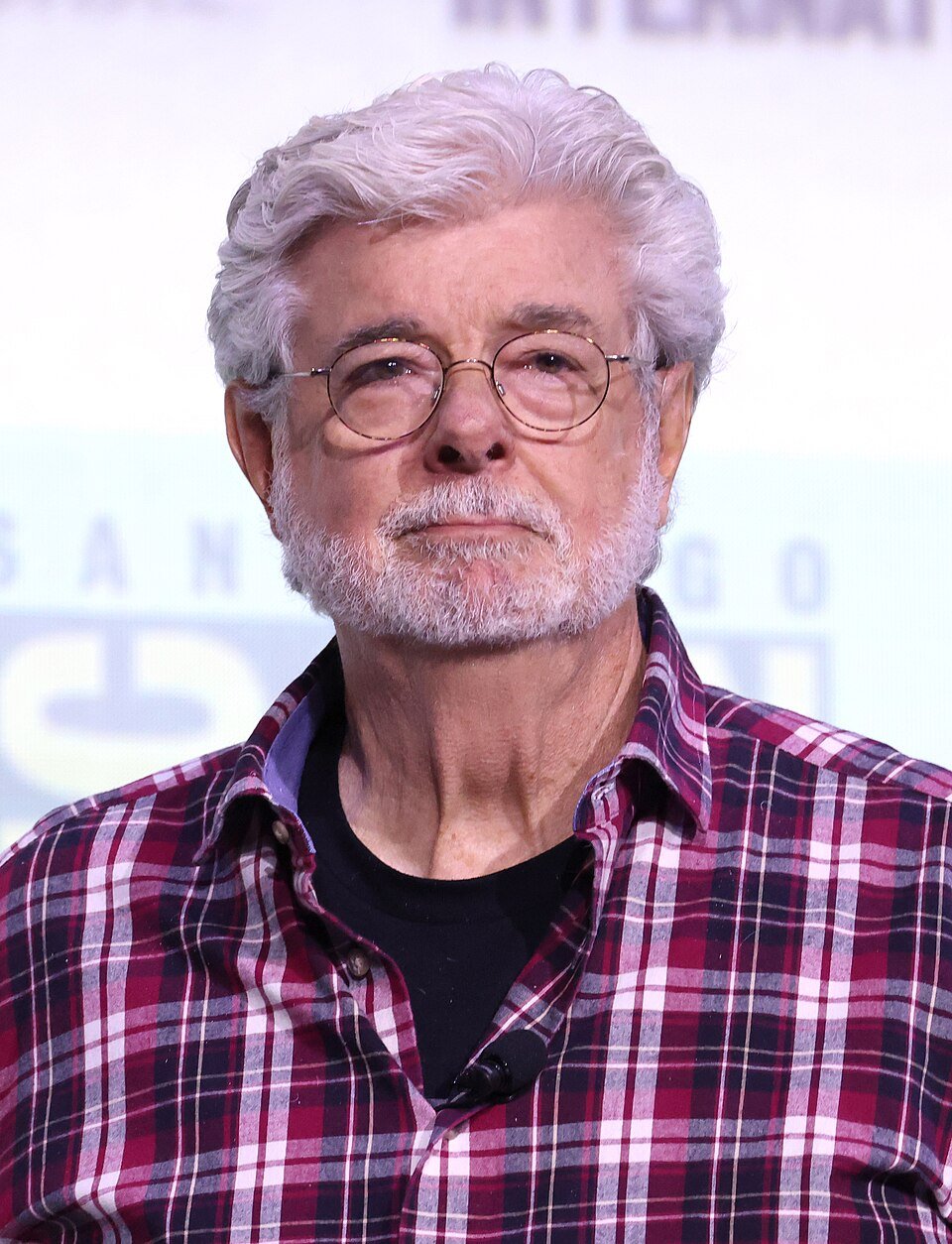
Gage Skidmore, CC BY-SA 3.0 <https://creativecommons.org/licenses/by-sa/3.0>, via Wikimedia Commons
George Lucas has spent much of his career forcing Hollywood to adopt technologies it initially resisted. Now, at 82, the filmmaker behind Star Wars is making the case that artificial intelligence should be viewed much the same way.
In an interview with A Rabbit’s Foot picked up by Variety on July 15, Lucas dismissed the idea that Hollywood can somehow hold back AI, arguing that artificial intelligence will ultimately make filmmaking easier. “There’s nothing you can do about it,” he said of the technology’s arrival. “It’s going to be there.”
Coming from Lucas, the comments carry unusual weight. Long before generative AI became Hollywood’s favorite argument, Lucas repeatedly bet on technologies that disrupted established production practices. Industrial Light & Magic, founded in 1975 to create the visual effects for Star Wars, became one of the most influential effects companies in the business. Lucasfilm also pushed digital editing, computer-generated characters and digital cinematography at moments when much of Hollywood remained committed to analog workflows.
Lucas sees AI as part of that continuum. Rather than treating it as an existential threat to filmmaking, he described artificial intelligence as another technology that expands what filmmakers can accomplish. “Artificial intelligence means it’s much easier for us to make movies,” he said. His position is striking partly because it arrives as some of Hollywood’s most prominent directors are drawing a much harder line around generative technology.
That divide has become increasingly visible this summer. Guillermo del Toro said in July that he prohibited AI from the new 3D and HDR restoration of Pan’s Labyrinth, arguing that filmmakers are protecting a “lineage of art” and the generations of craftspeople who learn from one another. Christopher Nolan and other directors have likewise expressed skepticism about allowing generative systems to substitute for human creative work.
Lucas represents the counterargument, and his history makes it difficult to dismiss as simple Silicon Valley boosterism. Many of the technologies now considered fundamental to modern filmmaking once generated their own fears about creative displacement. Digital editing reduced dependence on physical film. CGI transformed effects departments. Digital cameras challenged celluloid. Lucas embraced those changes early, sometimes years before the rest of the industry caught up.
There is, however, an important difference between those transitions and generative AI. A digital camera did not need millions of existing creative works to learn how to produce an image. Current generative models have therefore created copyright, compensation and authorship questions that earlier production technologies largely avoided. Lucas’s technological argument does not resolve those disputes.
His comments nevertheless expose a growing philosophical split among filmmakers. The question is no longer simply whether Hollywood will use AI. Studios, visual-effects companies and production vendors are already experimenting with it. The more interesting creative argument is where filmmakers decide the machine should stop.
For Lucas, technological change has historically expanded the director’s toolbox. For filmmakers such as del Toro, the danger is that this particular tool could eventually erode the human craft that makes the toolbox valuable in the first place.
It is a debate Lucas has effectively been participating in for half a century. In the 1970s, he needed new technology to make a galaxy that conventional Hollywood production could not give him. Fifty years later, he is again telling filmmakers that the technology is coming whether they like it or not.
The difference this time is that Hollywood isn’t only asking what the new technology can create. It is asking who, exactly, will still be doing the creating.