
Brad Pitt and the Economics of the Digital Double
Why A-list stars are renegotiating longevity, not novelty, in the AI era
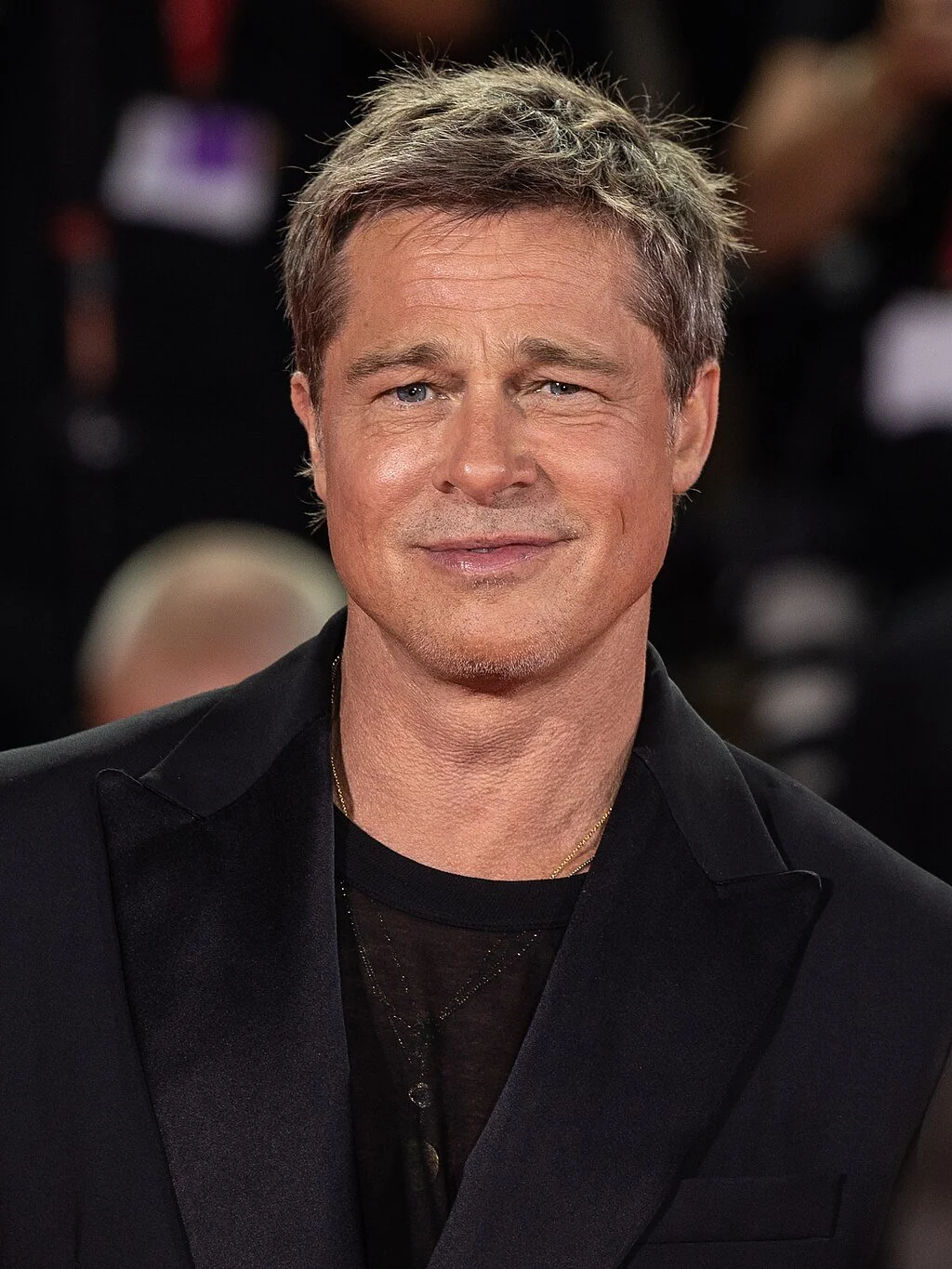
Harald Krichel, CC BY-SA 4.0 <https://creativecommons.org/licenses/by-sa/4.0>, via Wikimedia Commons
Brad Pitt has not announced an AI partnership. He hasn’t licensed his likeness, released a synthetic performance, or endorsed generative tools in any formal way. And yet, his name comes up repeatedly in conversations about Hollywood’s AI future.
The reason isn’t experimentation. It’s leverage.
As studios and agencies begin quietly modeling what AI means for long-term franchises and aging stars, Pitt represents a category that executives increasingly focus on: globally recognizable talent whose commercial value extends beyond peak physical performance. In other words, stars whose brand will outlive their on-screen output.
In January, multiple agency executives confirmed that discussions around “digital doubles” for A-list actors are no longer speculative. They’re economic. The question isn’t whether a star would ever allow a synthetic version of themselves—it’s under what conditions, and for how long.
For someone like Pitt, the risk isn’t replacement. It’s dilution. An AI-generated version that appears too frequently, too cheaply, or in the wrong context could erode the scarcity that defines his value. That makes restraint more powerful than participation.
Studios understand this. While generative tools are increasingly used for de-aging, previs, and limited VFX augmentation, fully synthetic performances by top-tier actors remain off-limits without explicit, tightly scoped agreements. These aren’t tech deals; they’re estate-level negotiations happening while the stars are still alive.
Agents describe the shift as a move from “project thinking” to “lifecycle thinking.” Instead of licensing likeness for a single film, discussions now revolve around decades: archival use, post-retirement appearances, franchise continuity, even hypothetical posthumous scenarios.
What’s striking is how conservative these conversations are. Unlike tech platforms eager to demonstrate possibility, Hollywood’s biggest stars are focused on containment. AI is treated less like an opportunity for expansion than a force that must be boxed in early, before it defines the terms unilaterally.
This marks a sharp divide between celebrity tiers. Emerging talent may see AI as amplification or access. A-listers see it as a threat to control. The more valuable the identity, the less incentive there is to automate it.
Pitt’s significance, then, isn’t about adoption. It’s about refusal. His generation of stars doesn’t need AI to stay relevant. They need it not to cheapen what relevance means.
Hollywood has always revolved around scarcity—limited appearances, limited access, limited supply. AI destabilizes that logic by making replication trivial. The response from the top isn’t curiosity. It’s boundary-setting.
When studios talk about the future of AI and celebrities, they aren’t asking what technology can do. They’re asking how long they can delay doing it.
For now, stars like Pitt are betting that restraint preserves value better than innovation ever could.